The Reality of a CNA Salary in Arizona: What to Expect in 2026
Let’s talk numbers, because your time and energy are valuable. The most common question I get is about salary, and I believe in giving you a straight answer.
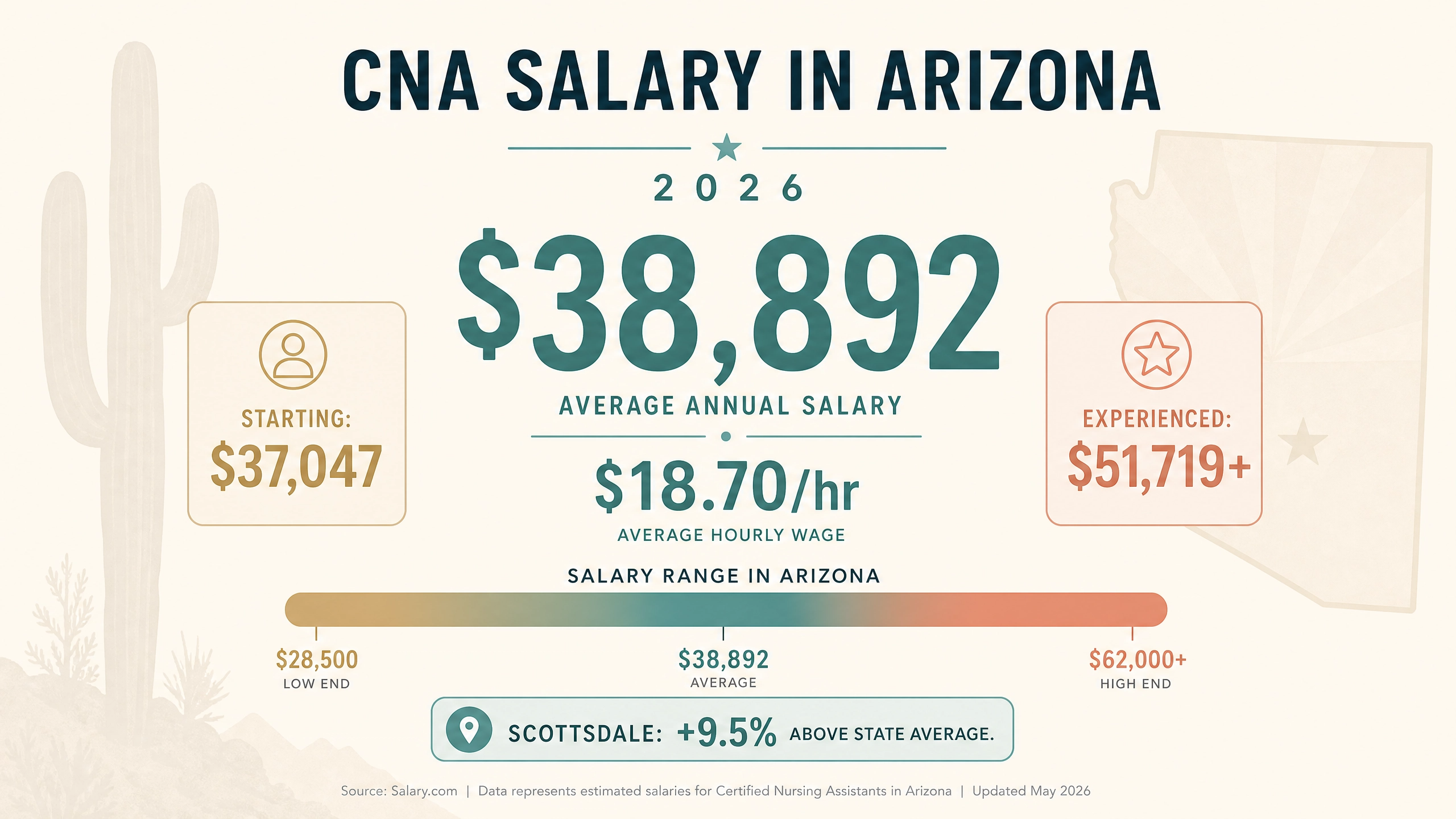
The average Certified Nursing Assistant salary in Arizona is around $38,892 per year, which comes out to about $18.70 an hour. However, this is just a midpoint. When you’re just starting, you might see offers closer to $37,047. On the other hand, with experience, specialized skills, and the right employer, you can absolutely push that number past $51,719.
Your location within Arizona matters significantly. A CNA job in Scottsdale or Vail will often pay more than one in a smaller, rural town. For instance, the average salary in Scottsdale is about 9.5% higher than the statewide average. This is driven by cost of living and the concentration of high-acuity medical facilities.
Now, I know what you might see if you look at national rankings: Arizona is listed near the bottom for CNA pay. This is a fact, and it’s important to acknowledge. But here’s the perspective I offer to every aspiring nurse I mentor:
Don’t view the starting CNA salary as your final destination. View it as the fastest, paid entry point into the entire healthcare field. It’s not just a job; it’s a launchpad.
Think about it this way: you can complete your CNA training in as little as five weeks. That’s five weeks to go from zero medical experience to earning a paycheck while standing on the front lines of patient care. Compare that to the two to four years required for a degree as a Registered Nurse. Starting as a CNA allows you to confirm that nursing is the right path for you, all while building invaluable experience and a professional network.
Your 5-Step Roadmap to CNA Certification in Arizona
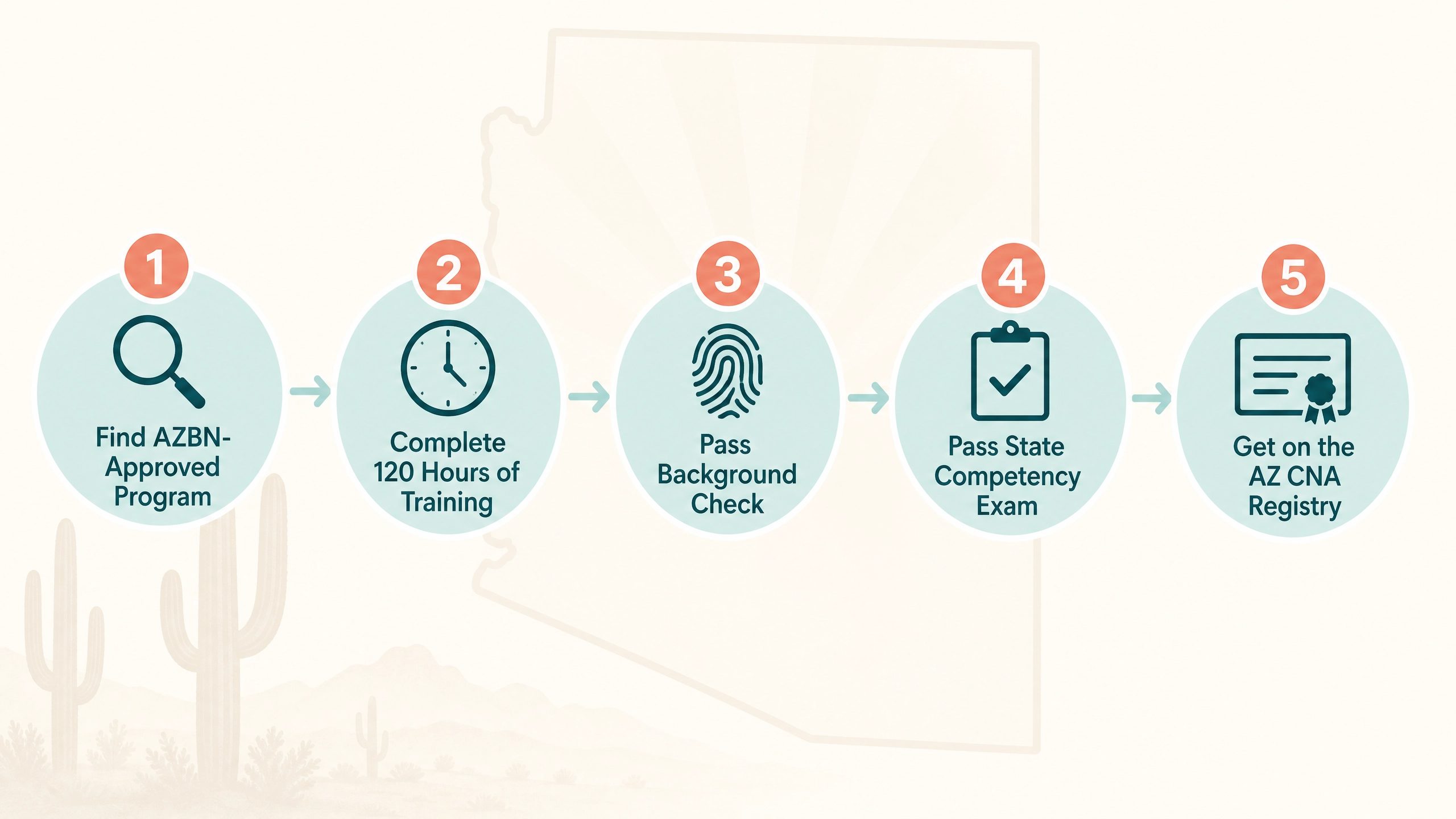
The path to becoming a CNA in Arizona is straightforward and regulated by the Arizona State Board of Nursing (AZBN). There’s no secret handshake or hidden trick; it’s about meeting clear, specific requirements. I’ve broken down the process into five manageable steps so you know exactly what to expect.
1. Find a State-Approved CNA Training Program

This is the non-negotiable first step. Your training must come from a program officially approved by the AZBN. These programs have been vetted to ensure they meet the state’s rigorous standards for quality and content. A quick search on the AZBN website will give you a full list of approved CNA training programs in Arizona.
2. Complete 120 Hours of Training
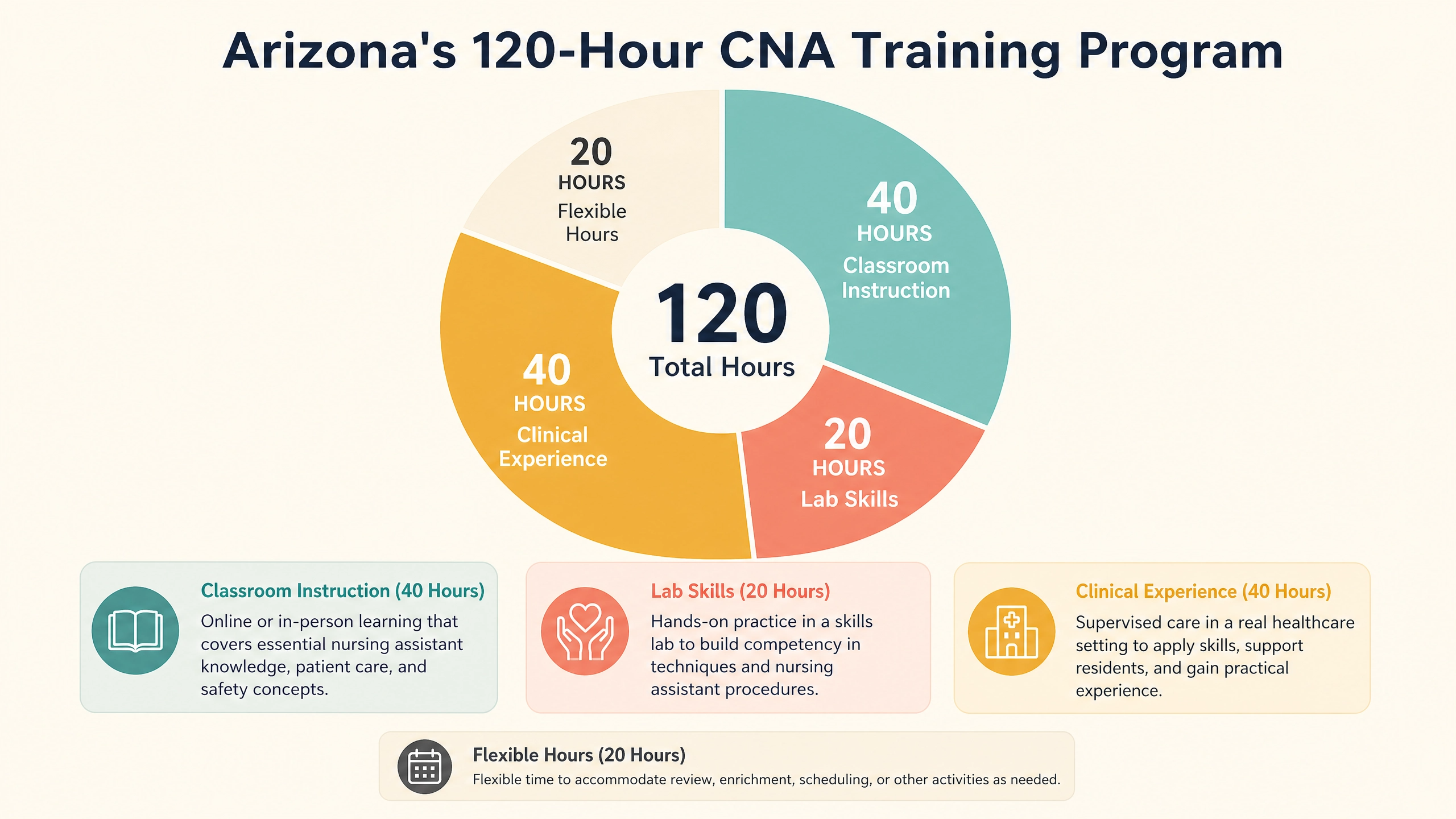
Arizona mandates a minimum of 120 hours of comprehensive training. This isn’t just sitting in a classroom. The curriculum is specifically designed to prepare you for the reality of the job and is broken down into three parts:
- Classroom Instruction (40+ hours): You’ll learn the fundamentals of anatomy, patient rights, infection control, and communication.
- Lab Skills (20+ hours): This is where you get hands-on practice in a controlled environment. You’ll master essential skills like taking vital signs, assisting with mobility, and providing personal care.
- Clinical Experience (40+ hours): You’ll work directly with patients in a real healthcare setting, like a skilled nursing facility, under the direct supervision of an RN instructor. This is where the theory becomes reality.
3. Pass a Background Check
While the AZBN doesn’t require a fingerprint clearance card for CNA certification, virtually every healthcare employer in the state will require one as a condition of employment. It’s best to be prepared for this. The process is straightforward and is designed to ensure patient safety.
4. Pass the State Competency Exam

After completing your training, you’ll sit for the state certification exam. This exam has two parts: a written test (an oral version is available if needed) that covers the knowledge you learned in class, and a practical skills test. During the skills portion, you’ll be asked to perform several CNA tasks in front of an evaluator to demonstrate your competency.
5. Get Listed on the AZ CNA Registry
Once you pass both parts of the exam, your name will be added to the official Arizona CNA Registry. Congratulations! At this point, you are officially a Certified Nursing Assistant and are eligible to be hired for CNA jobs in Arizona.
A Note on CNA vs. LNA in Arizona
You might also hear the term LNA, or Licensed Nursing Assistant. In Arizona, an LNA is a CNA who has met additional requirements, including a fingerprint background check for licensure. This allows them to perform slightly different duties under specific circumstances. For most entry-level positions, a CNA certification is the standard you’ll need to meet.
Where the Best Arizona CNA Jobs Are Hiding
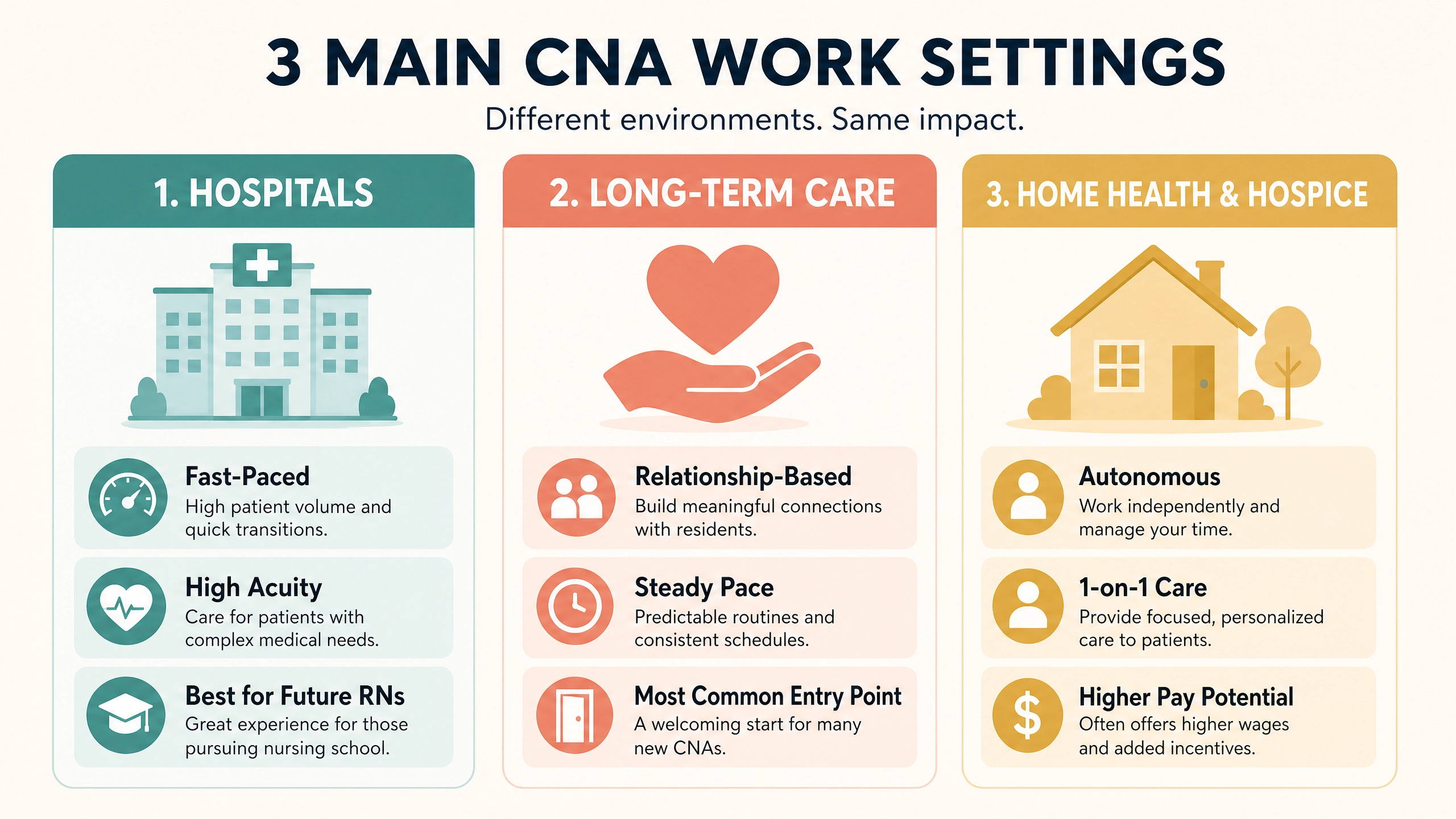
Once you’re certified, the next question is: where do you actually want to work? The term “CNA job” can mean a dozen different things depending on the environment. The right choice for you depends on your personality, career goals, and the kind of pace you thrive in. Let’s look at the main options.
Hospitals vs. Long-Term Care vs. Home Health
Hospitals: Working in a hospital like Banner Health, Dignity Health, or the Mayo Clinic is a fast-paced experience. You’ll be exposed to a wide variety of acute medical conditions and work with patients who have complex needs. This is an incredible learning environment, especially if your long-term goal is to become an RN. You might work on a general medical-surgical floor or even in a more specialized unit like an ICU or Emergency Department as a Patient Care Technician (PCT).

Long-Term Care & Skilled Nursing Facilities: This is the most common setting for new CNAs and likely where you’ll do your clinical training. Here, the focus is on building relationships with residents you care for over weeks, months, or even years. You become a vital part of their daily lives, assisting with activities of daily living (ADLs) and providing consistent, compassionate care. The pace can be less frantic than a hospital, but the emotional and physical demands are just as real.

Home Health & Hospice: If you value autonomy and one-on-one patient interaction, home health could be a great fit. You travel to patients’ homes to provide care, which requires strong organizational skills and the ability to work independently. Hospice care is a specialized subset of this, focusing on providing comfort and dignity to patients at the end of life. This work is deeply meaningful and often commands a higher pay rate due to its specialized nature.

Top-Paying & In-Demand CNA Specialties
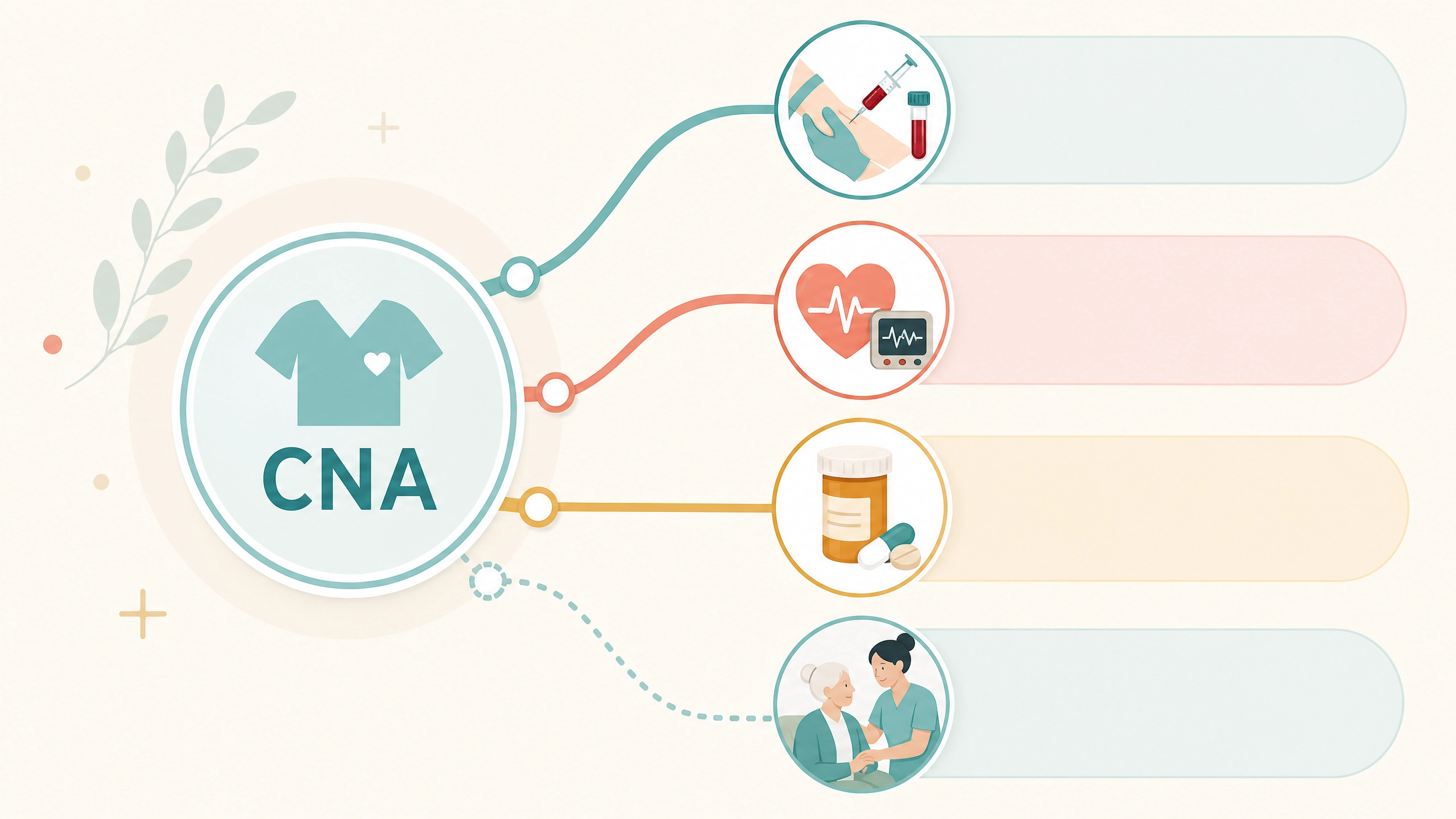
Not all CNA roles are created equal. As you gain experience, you can pursue specializations that increase your skills and your paycheck. The demand for CNAs with geriatric care expertise is soaring, thanks to Arizona’s growing senior population. Other paths include:
- Patient Care Technician (PCT): Often found in hospitals, PCTs have additional skills like drawing blood (phlebotomy) or performing EKGs.
- Critical Care CNA: These CNAs work in intensive care units, assisting nurses with highly vulnerable patients.
- Certified Medication Aide (CMA): With additional training, CMAs can administer certain medications under the supervision of a nurse.
Exploring these specialties is a smart way to advance your career. You can see what employers are looking for right now on our live Arizona nursing job board.
From Certified to Hired: Systemizing Your CNA Job Search

You’ve done the hard work of getting certified. Now comes the challenge of navigating the job market. It’s easy to feel lost in a sea of applications, cover letters, and follow-up emails. The key is to approach your job search with a system, just like you’d approach a patient care plan.
Building a Standout Resume (Even with No Experience)
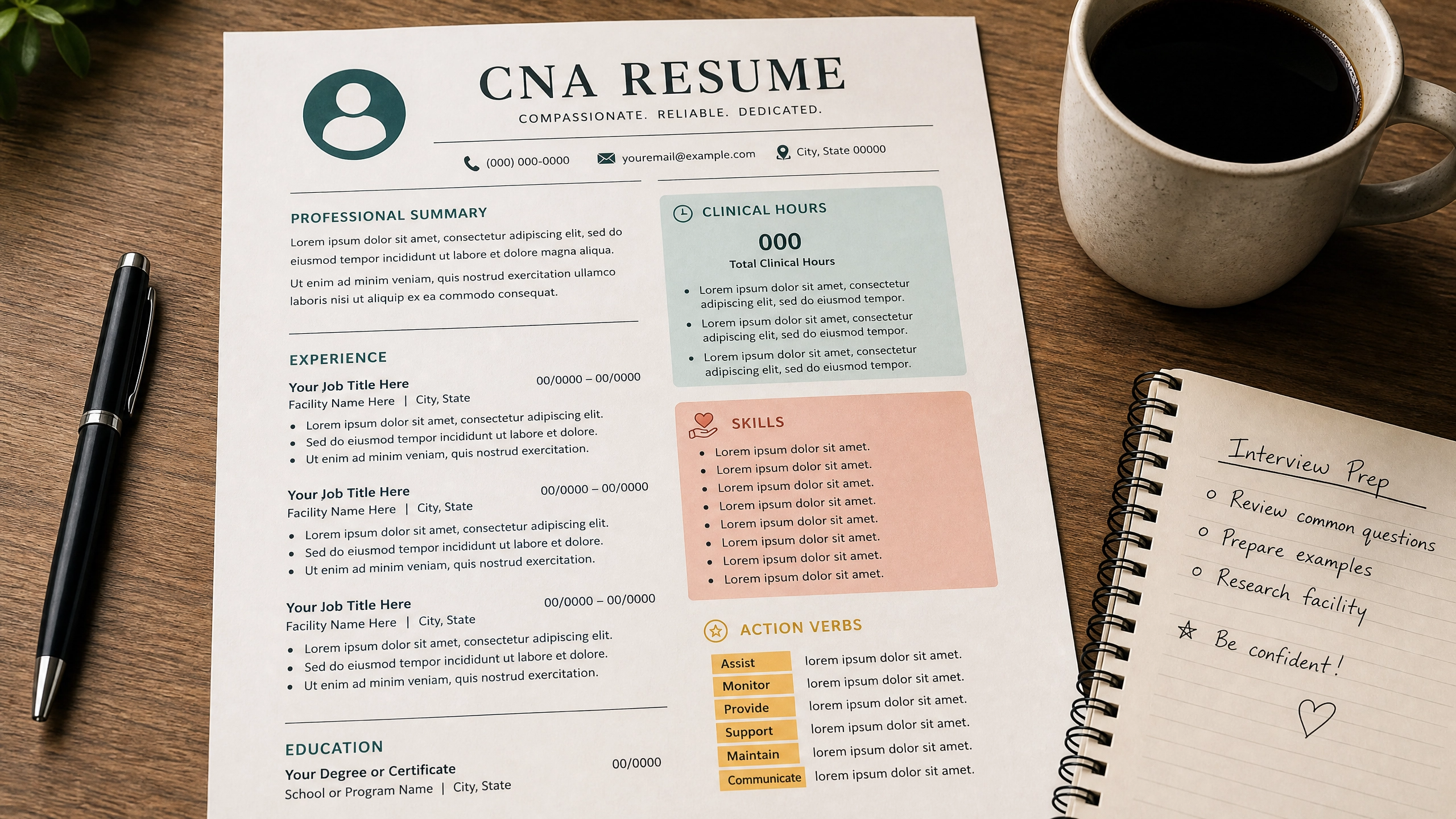
Your resume is your first impression. Even if you don’t have prior healthcare experience, you can create a powerful document. Instead of focusing on what you lack, highlight what you have:
Feature your clinical hours prominently. List the facility where you trained and the total number of clinical hours completed (e.g., “Completed 40 hours of supervised clinical training at ABC Skilled Nursing”).
Create a “Skills” section. Don’t just say you’re a CNA. List the specific skills you mastered: Taking Vital Signs, Patient Repositioning, ADL Assistance, Infection Control Protocols, Electronic Health Record (EHR) Charting, and Empathetic Communication.
Use strong action verbs. Instead of “was responsible for,” use words like “Assisted,” “Monitored,” “Documented,” “Communicated,” and “Provided.”
When I was mentoring new nurses, I saw the same problem repeat itself: a messy spreadsheet, missed follow-up emails, and the sinking feeling of not knowing where you stand with 10 different applications. It’s overwhelming.
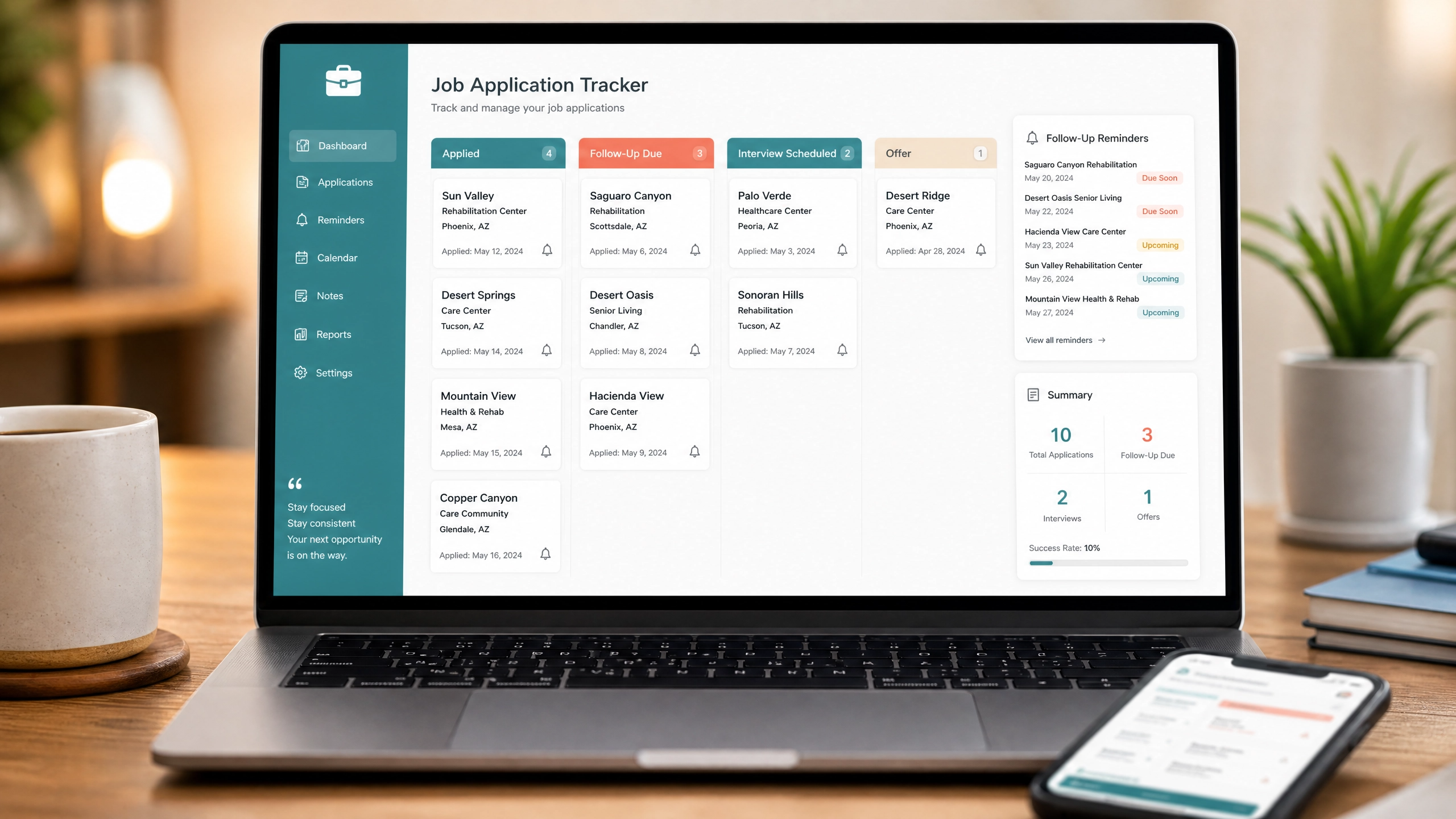
This is exactly why I built the Job Application Tracker into the Nursing Success Kit. It’s a simple, visual dashboard to log every application, track its status from ‘Applied’ to ‘Offer,’ and set reminders so you never miss a follow-up. It brings order to the chaos. Having a system doesn’t just reduce your stress; it demonstrates to potential employers that you’re organized, professional, and serious about your career.
The CNA Career Ladder: Your Path to an RN Degree in Arizona
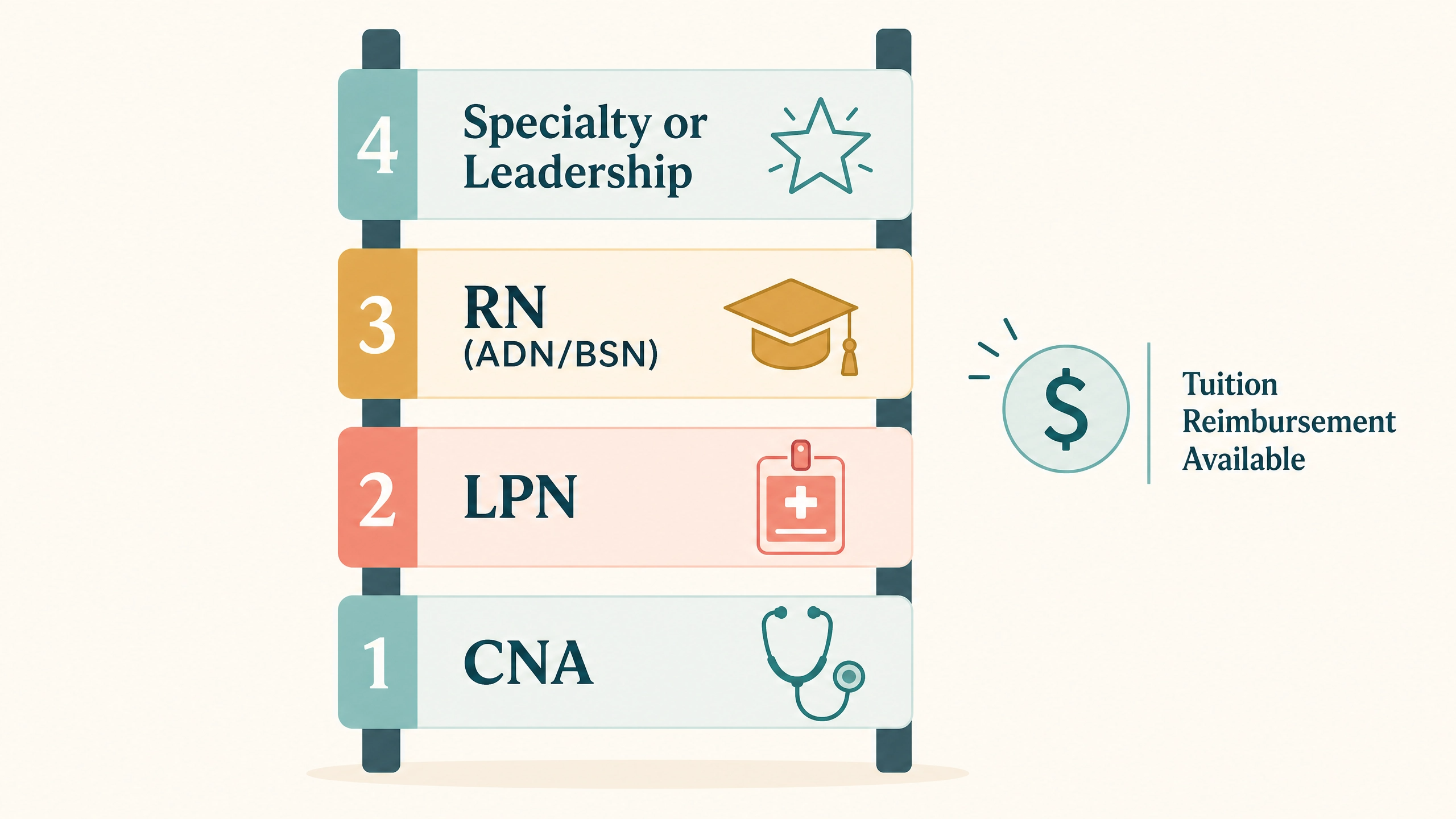 One of the biggest misconceptions I hear is that being a CNA is a dead-end job. Nothing could be further from the truth. In fact, it’s the smartest, most practical foundation you can build for a long and successful nursing career.
Think of it as the first rung on a very clear ladder. Your hands-on experience as a CNA gives you a massive advantage when you decide to take the next step.
CNA to LPN: The next logical step for many is becoming a Licensed Practical Nurse (LPN). The training program is typically about one year, and it builds directly on the skills and knowledge you already possess.
CNA to ADN/BSN: This is the path to becoming a Registered Nurse. Your experience as a Certified Nursing Assistant makes you an incredibly strong candidate for nursing school. Admissions committees at Arizona colleges love to see applicants who have already proven their commitment to patient care. You’re not just a student with a good GPA; you’re someone who has been in the trenches and understands the reality of nursing.
Many of the top healthcare employers in Arizona, like Banner Health and HonorHealth, offer tuition reimbursement programs specifically for employees who want to advance their education. They are willing to invest in you because they’ve seen your work ethic and dedication firsthand as a CNA.
Starting as a CNA is not settling. It’s strategizing. You’re getting paid to learn, building a professional network, and gaining experience that will serve you for the rest of your career, whether you pursue an ADN program or a full BSN program.
Your Career in Patient Care Starts Now

We’ve covered a lot: the reality of a Certified Nursing Assistant salary in Arizona, the clear-cut steps to certification, where to find the best jobs, and how this role is a powerful launchpad for a lifelong career. The demand for skilled, compassionate CNAs in our state is undeniable and will only continue to grow.
You have the roadmap. You understand the challenges and the incredible opportunities. The only thing left is to take the first step. Your future in a stable, rewarding healthcare career isn’t a distant dream; it’s a direct result of the actions you take today.
What will you do differently after reading this? Will you research an AZBN-approved program near you, start drafting your resume using the tips we discussed, or explore our live job board to see what opportunities are waiting for you? The first step is yours to take.