Understanding the TEAS Exam in Arizona
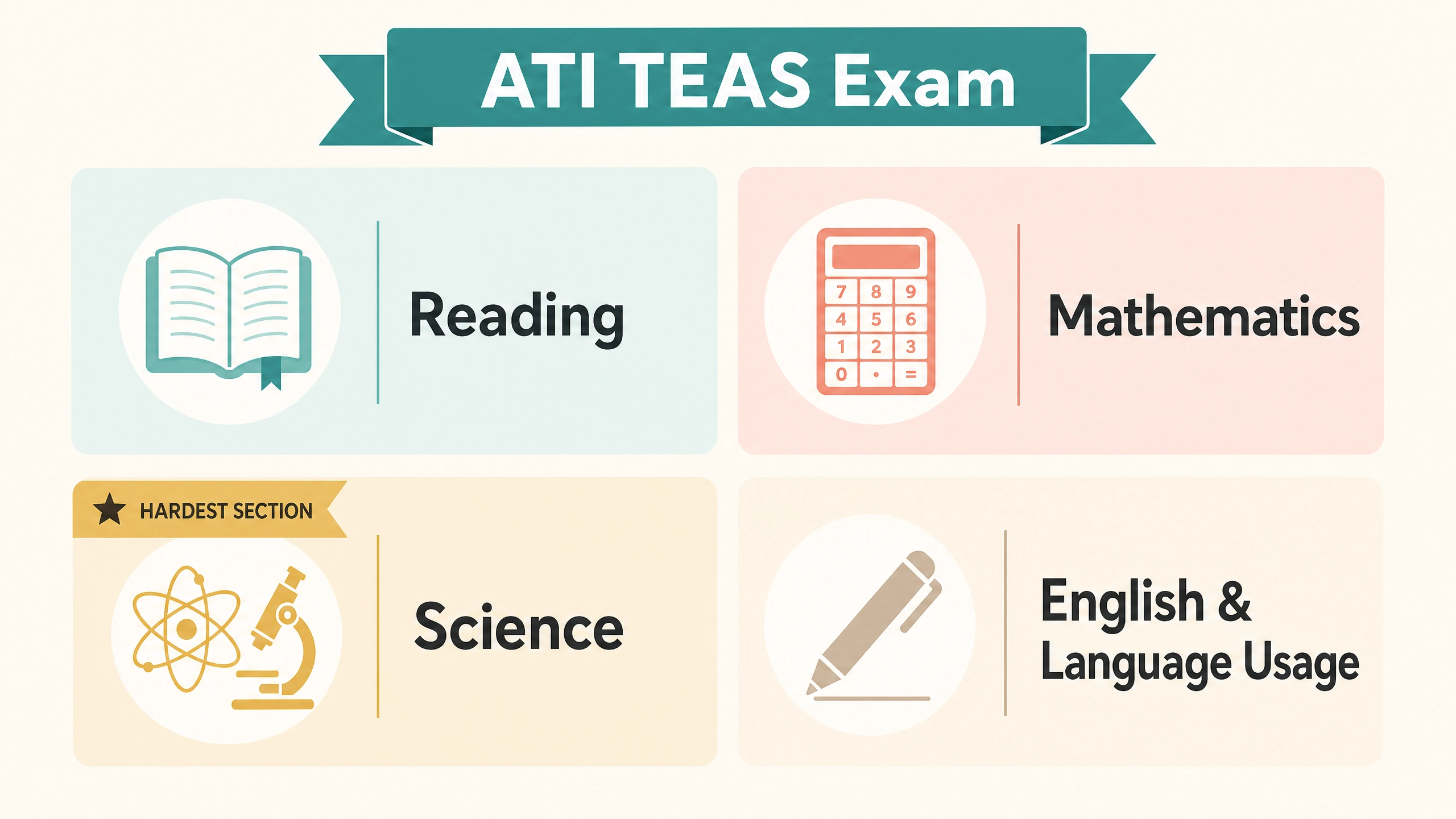
The ATI TEAS, or Test of Essential Academic Skills, is the standardized exam most Arizona nursing programs use to gauge your academic readiness. Think of it less as a final exam and more as the gatekeeper standing between your prerequisites and your first day of clinicals.
It’s designed to measure foundational knowledge across four key areas: Reading, Mathematics, Science, and English and Language Usage. It tells admissions committees if you have the core skills to handle the pace and complexity of nursing school.
While every program sets its own minimum score, a clear pattern has emerged across the state. For most competitive ADN and BSN programs, a composite score of 70% or higher is the unofficial golden ticket. This score signals to schools that you’re not just academically eligible, but likely to succeed. The Arizona State Board of Nursing expects programs to produce graduates who can pass the NCLEX, and the TEAS is their first line of defense in identifying those candidates.
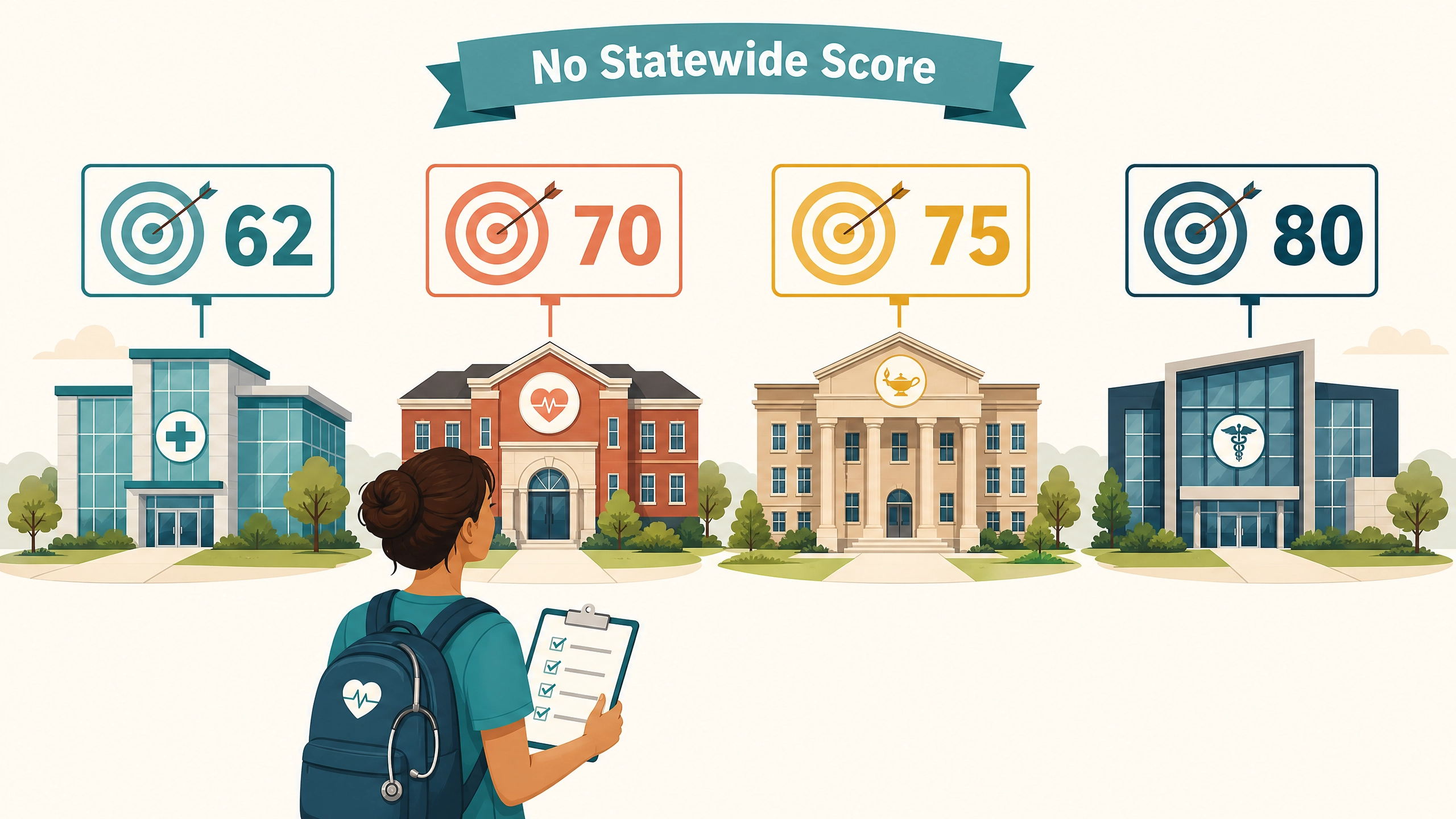
Do All Arizona Nursing Schools Require the Same Score?
One of the biggest misconceptions I see is the belief in a single, statewide TEAS score. The truth is, the requirement varies significantly not just by the type of degree, but from one school to the next. A score that gets you an interview at one college might not even pass the initial screening at another.
It’s your responsibility to know the specific target for every single program on your list
Community College (ADN) Cutoffs
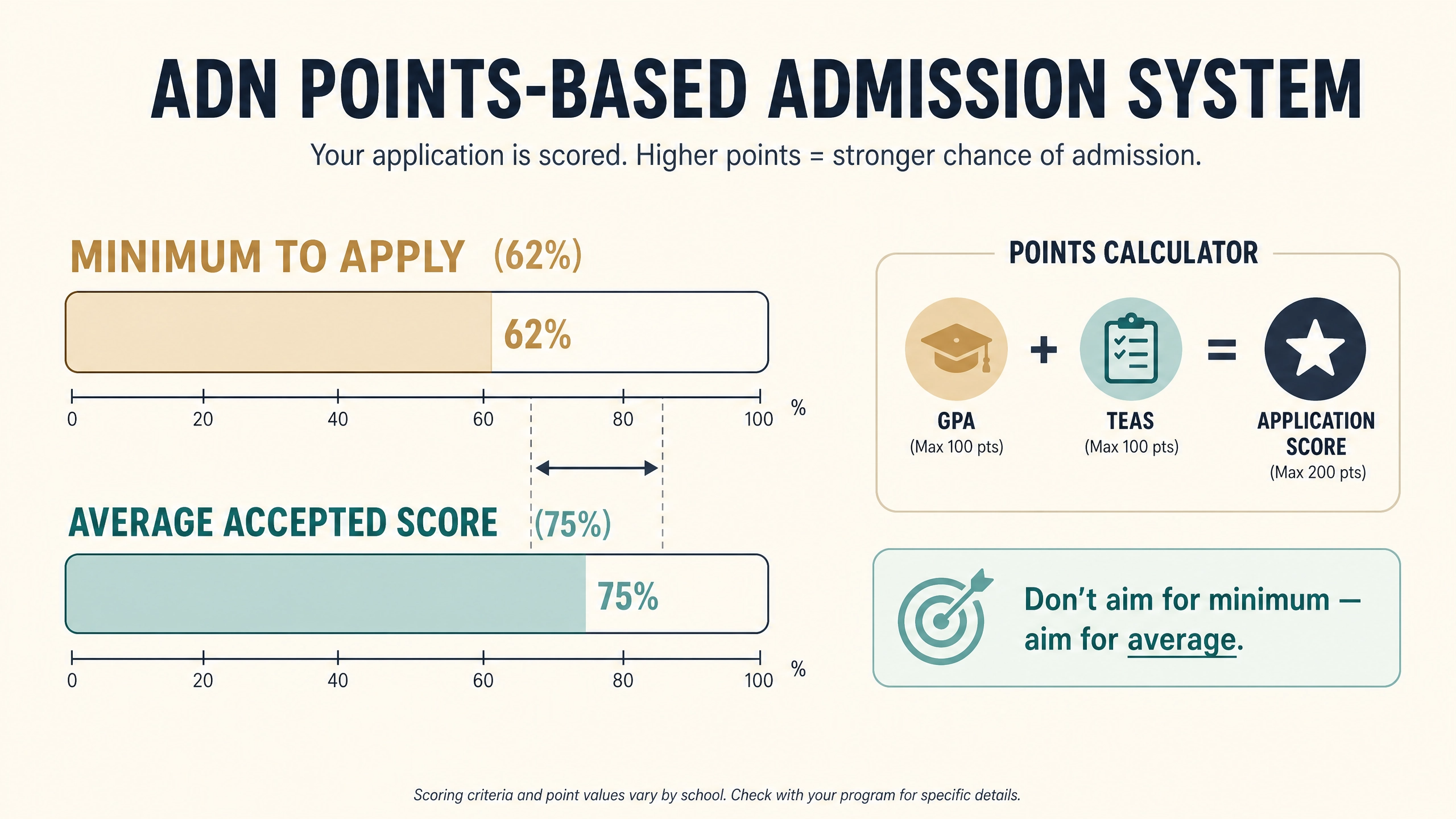
Associate Degree in Nursing (ADN) programs, often hosted at community colleges, tend to be very straightforward with their requirements. They frequently use a points-based system where your GPA and TEAS score are the primary factors. There’s often a hard cutoff—a minimum score you must achieve to even be considered.
For example, a school might state that a minimum composite score of 62% is required. However, because they receive hundreds of applications for a limited number of seats, the average score of accepted students is often closer to 75%. Don’t aim for the minimum; aim for the average score of the last accepted class.
University (BSN) Expectations
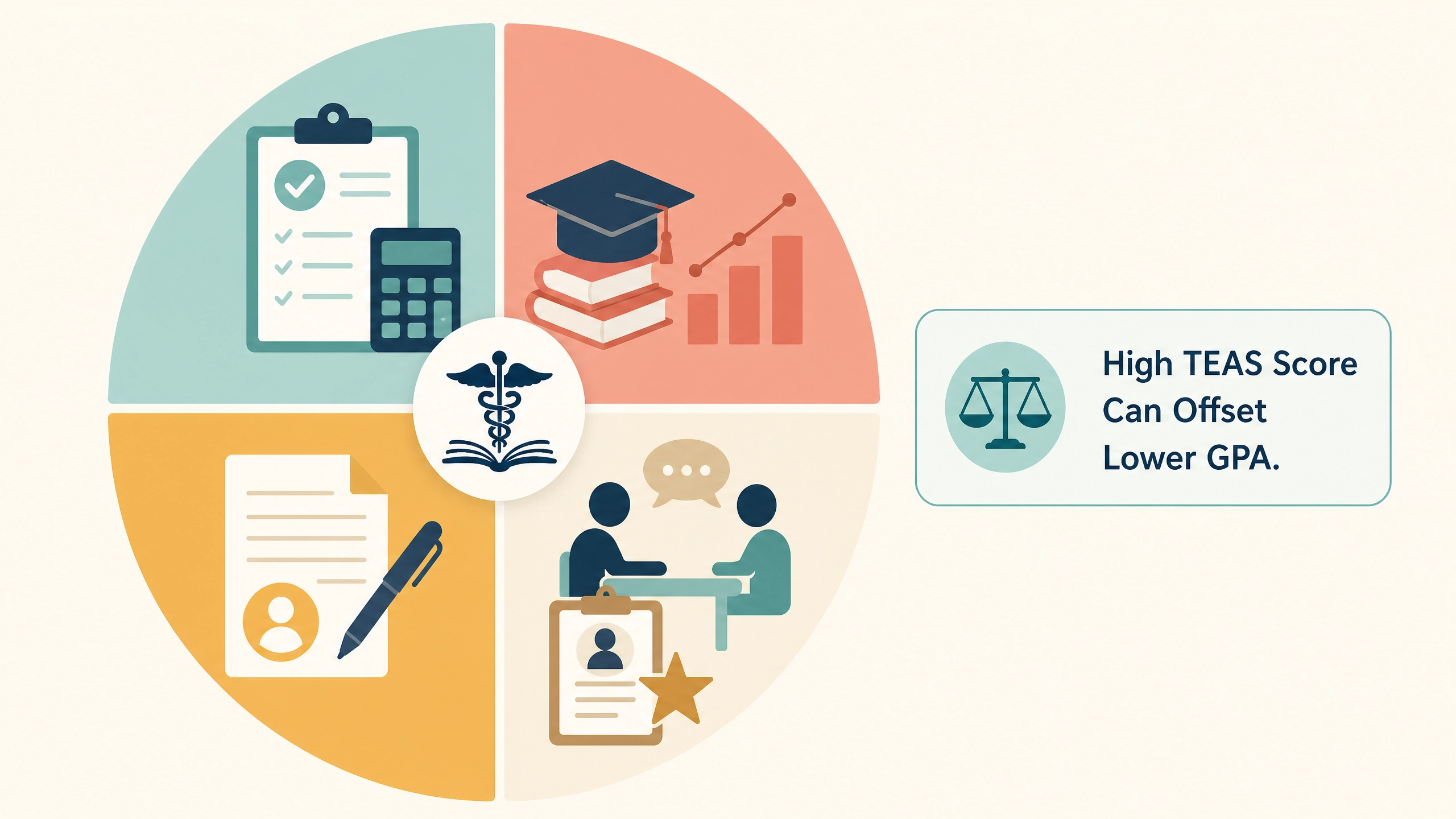
Universities offering a Bachelor of Science in Nursing (BSN) often take a more holistic approach. While the TEAS score is still a major factor, it’s weighed alongside your GPA, an admissions essay, letters of recommendation, and sometimes an interview.
Here, a higher TEAS score can work in your favor. A score in the 80s or 90s can help balance a slightly lower GPA from your early college days. It demonstrates recent academic strength and a specific aptitude for the kind of scientific reasoning you’ll use every day as an RN.
Why a “Passing” Score Isn’t Enough
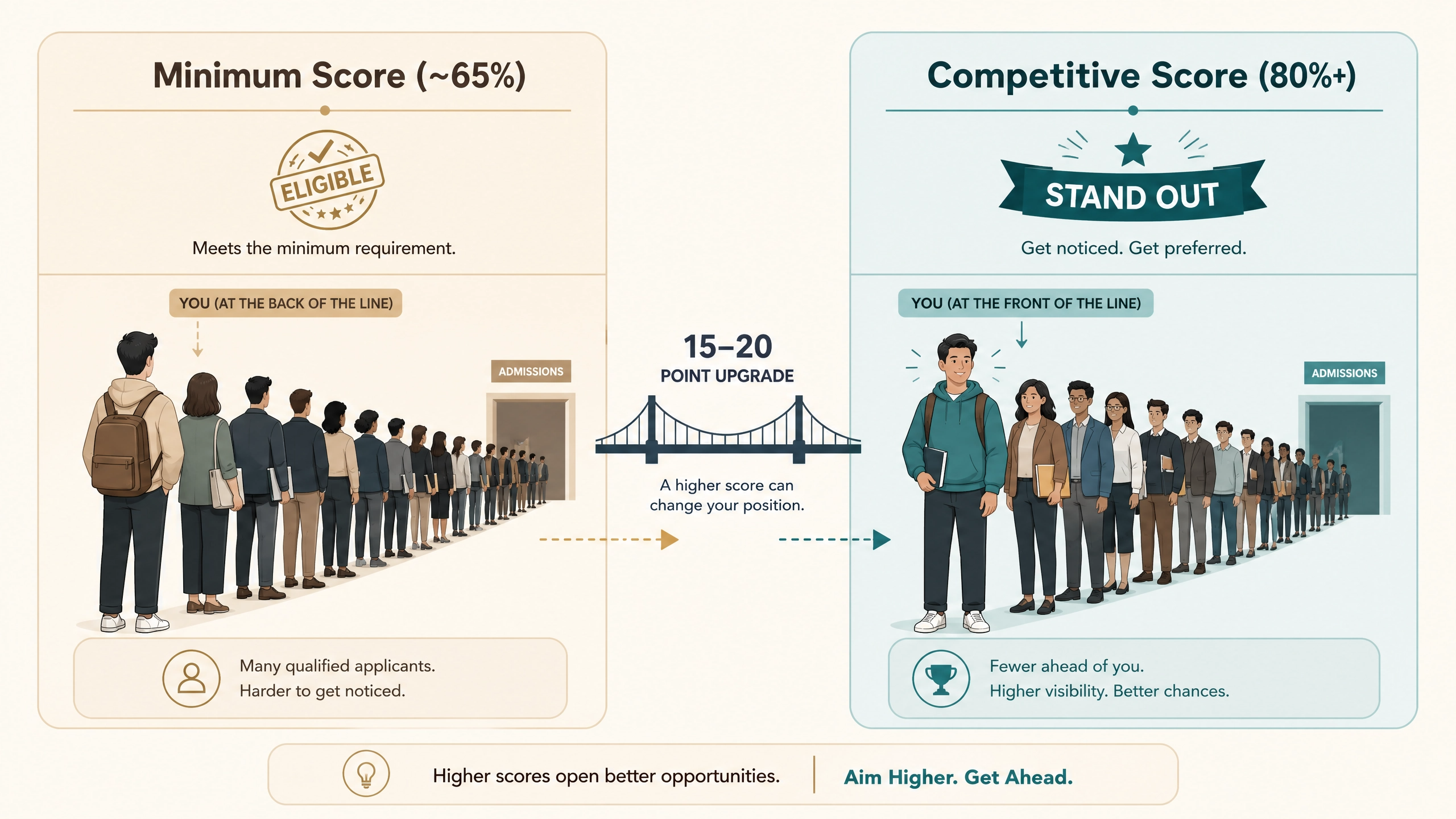
I hear students breathe a sigh of relief when they learn a school’s minimum TEAS score is 65%. “I can do that,” they say. And they’re right. But meeting the minimum is not the goal.
Arizona’s population has grown by over 12% in the last decade, and with it, the demand for nurses has exploded. This demand makes nursing programs incredibly competitive. According to the Bureau of Labor Statistics, the field is growing much faster than average, and Arizona is a hotspot for that growth. A “passing” score will put your application in the pile; a great score will get it noticed.
Think of it this way: The minimum score makes you eligible. A score 15-20 points higher makes you a candidate.
Aiming for an 80% or higher isn’t just about getting in. It’s about proving you have the academic foundation to handle the curriculum and, eventually, the NCLEX. The material on the TEAS, especially in science, directly overlaps with what you’ll see in pharmacology and pathophysiology. A high score is your first indicator of future success.
Mapping Your TEAS Prep to Your Nursing Path
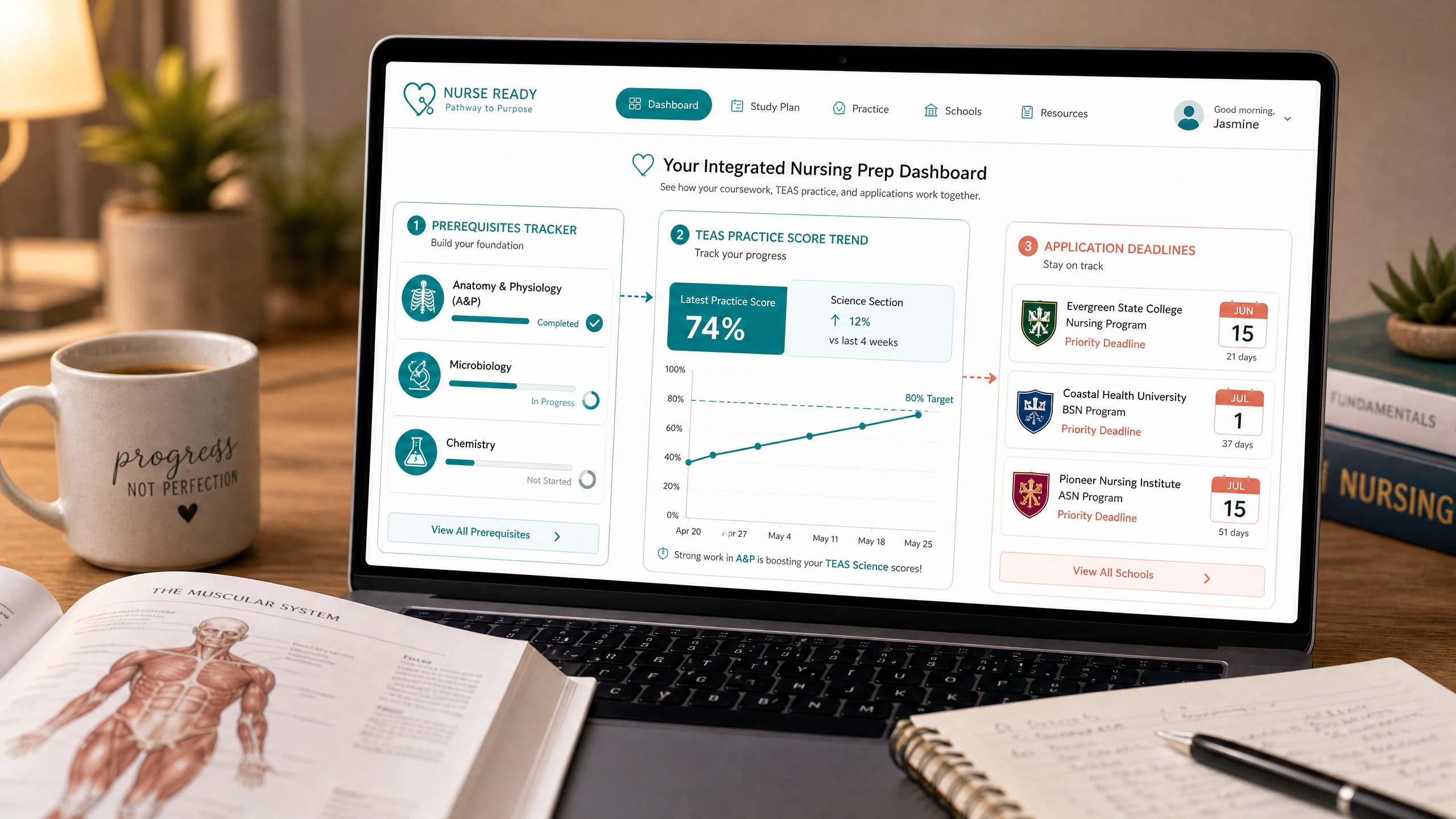
The TEAS exam doesn’t exist in a vacuum. You’re likely juggling it with demanding science courses like Anatomy, Physiology, and Microbiology. It’s a heavy load, and it’s easy to feel like you’re just trying to survive each week.
This is where a systematic approach becomes your best friend. Instead of treating your A&P grade, your TEAS prep, and your application deadlines as separate buckets of stress, you need to see them as interconnected parts of one mission. This is what I call the “Nursing Success Kit” mindset—centralizing your data so you always know where you stand.
Tracking your progress in an organized way is the single best tool for preventing burnout. Instead of just “studying,” you’re measuring. You can see your practice scores trending toward that 75% or 80% target. You can see that the hours you’re putting into A&P are also boosting your TEAS science score. This creates a feedback loop of confidence, not anxiety. A simple dashboard that tracks your pre-nursing prerequisites, TEAS scores, and application dates gives you control. It turns a chaotic process into a manageable project.
How to Study Smarter, Not Harder
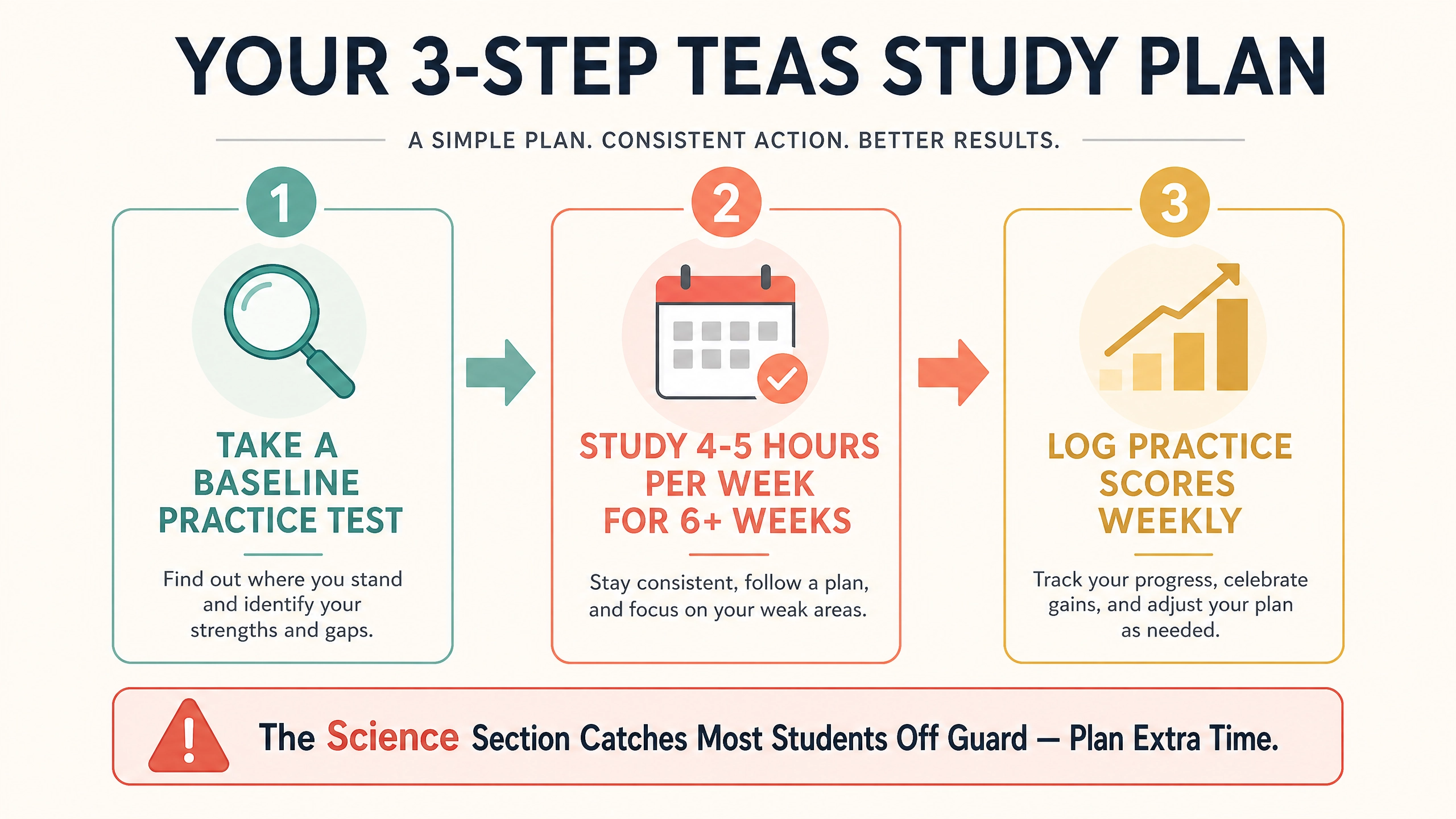
Cramming for the TEAS is the least effective way to prepare. The exam covers a wide range of foundational concepts that you can’t learn in a weekend. The key is consistent, focused effort.
The test is broken into four domains: Reading, Math, Science, and English. Of these, the Science section is almost always the one that catches students off guard. It pulls from biology, chemistry, anatomy, physiology, and scientific reasoning. Your A&P class is a great start, but it won’t cover everything.
A better approach is to create a structured study plan.
- Take a baseline practice test to identify your weakest areas. Don’t guess—find out exactly where the gaps are.
- Dedicate 4-5 hours per week for at least six weeks leading up to the exam. Consistency builds mastery far better than a few intense, 10-hour cram sessions.
- Keep a simple log of your study time and your practice quiz scores. Seeing your scores improve over time is a powerful motivator.
This isn’t just about memorizing facts; it’s about understanding how standardized tests work. The NCSBN, which develops the NCLEX, spends millions on test psychology. Learning to read questions carefully and eliminate wrong answers is a skill you’ll use for the rest of your career.
What to Do If You Don’t Meet the Score

First, take a deep breath. A low TEAS score is not a verdict on your potential as a nurse. It’s a single data point on a single day, and nearly every school in Arizona allows you to retake the exam.
Don’t immediately reschedule. Your first step is to get the detailed score report and analyze it. This is where a “Weakness Area Tracker” approach is essential. Identify the specific sub-sections where you lost the most points. Was it cardiovascular in the Science section? Or algebraic equations in Math? This tells you exactly where to focus your energy.
If you’ve retaken the exam and your dream school’s score is still out of reach, it’s time to look at other pathways. Your goal is to become an RN, and there are many ways to get there. Consider applying to other excellent programs with different admission criteria, including some of the cheapest ADN programs in Arizona. You might also explore starting in an LPN program, which allows you to enter the workforce sooner and then bridge to an RN program later.
Your Next Steps

The TEAS exam can feel like a massive wall standing between you and your nursing goals. But it’s not a wall; it’s just a hurdle. A well-prepared, strategic applicant can clear it successfully.
Your most important action item today is to stop thinking about the “average” score and find the exact requirements for your top-choice schools. Go to their nursing program admission pages, find the number, and write it down. This is your target. This single step moves the TEAS from an abstract source of stress to a concrete goal you can plan for.
Ready to organize your entire path from prerequisites to your first job? Explore the Nursing Success Kit to see how thousands of AZ students are keeping their milestones on track.
Frequently Asked Questions
 Visual header for frequently asked questions about TEAS score requirements for Arizona nursing programs
Note: Keep the FAQ Q&A content as structu
What is the minimum TEAS score for most Arizona nursing programs?
While some programs may accept a score of 60% or higher, most competitive programs in Arizona look for a composite score of 70% or higher. Always check the specific admission page for each school on your list.
Can I retake the TEAS exam in Arizona?
Yes, most institutions allow you to retake the TEAS. However, there is usually a mandatory waiting period between attempts, which can range from 30 days to several months. Check your target school’s policy before rescheduling.
How long are my nursing prerequisites good for?
In Arizona, core science courses like Anatomy & Physiology, Microbiology, and Chemistry typically expire. Most nursing programs require them to have been completed within the last 5 to 7 years.
Does a high TEAS score help if my GPA is low?
Yes, it often can, especially at universities with a holistic review process. Many programs use a point system where a high TEAS score can significantly boost your overall application rating and help offset a lower GPA.
Should I study for the TEAS while taking A&P?
Absolutely. The content, particularly for the TEAS Science section, has significant overlap with Anatomy & Physiology. Using your A&P study time to consciously prepare for the TEAS is one of the most efficient ways to study.