The Big Mistake: Why “More Questions” Isn’t the Answer

Many nursing students approach the NCLEX with a simple, brute-force strategy: answer as many practice questions as humanly possible. They buy access to massive question banks (Qbanks) and spend hours churning through hundreds, even thousands, of items.
There’s an undeniable “illusion of productivity” in this. Seeing your completed question count climb feels like progress. But it’s often a trap.
The NCLEX isn’t a test of rote memorization. It’s a test of clinical judgment and critical thinking. It assesses your ability to apply what you learned in your BSN or ADN program to complex, real-world nursing scenarios. The exam wants to know if you’re a safe, competent, entry-level nurse—not if you can recall an obscure fact from a textbook.
This is truer now than ever with the full rollout of the Next Generation NCLEX (NGN). The NGN format, with its case studies and new item types, is specifically designed to measure your clinical judgment skills.
Here’s the truth I wish I’d known earlier in my career: one single NCLEX practice question, properly analyzed, is worth more than ten questions answered superficially.
The real learning doesn’t happen when you select an answer. It happens in the moments *after* you click “submit.” That’s where you build the mental muscles needed for exam day. Answering more questions without this deep analysis is like running on a treadmill and wondering why you never arrive anywhere new.
Watch: How the Next Generation NCLEX measures clinical judgment differently.
The 4-Step Post-Question Blueprint
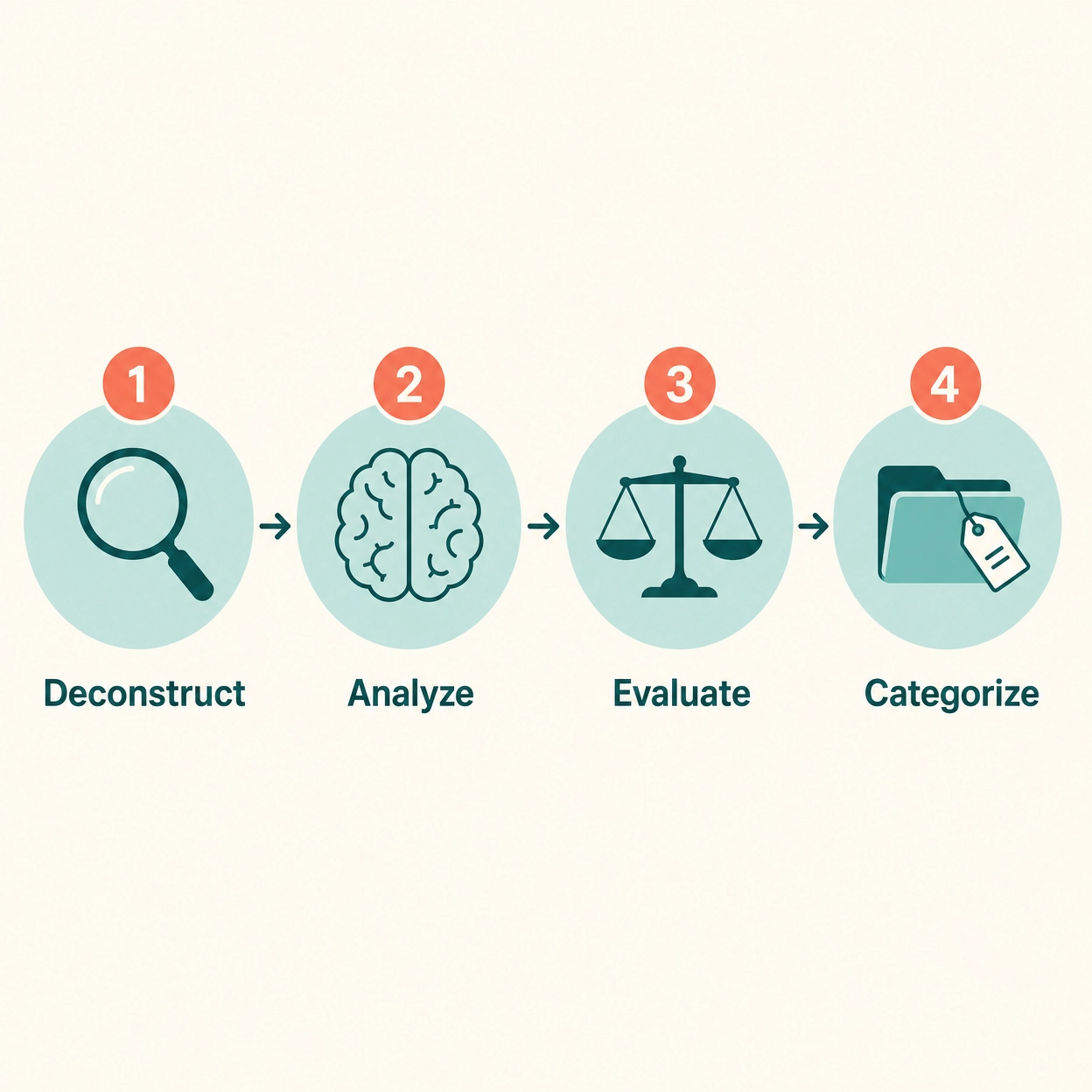
This is where we reframe your study approach. Instead of focusing on quantity, we’re going to focus on a high-quality, repeatable process. This 4-step blueprint is what you should do after every NCLEX question, whether you answered it correctly or not.
This systematic review turns each question from a simple pass/fail event into a powerful micro-learning opportunity. This is the difference between passive review and active rehearsal for passing your exam.
Step 1: Deconstruct the Question Stem
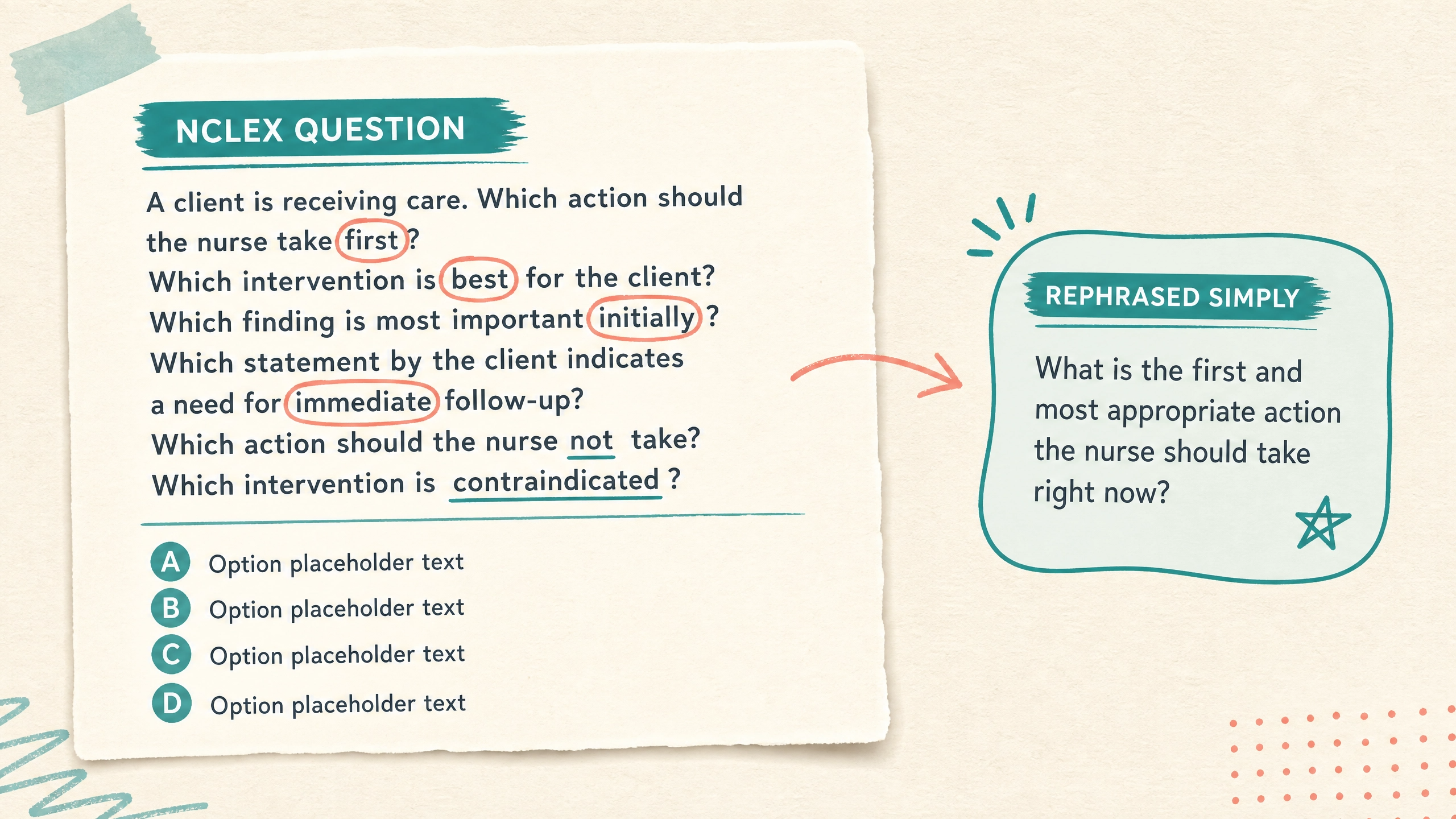
Before you even look at the options, you need to act like a detective and dissect the question itself. Your first job is to understand exactly what is being asked of you.
Start by identifying keywords. These are the words that dictate your priorities. Look for terms like:
- Priority words: “first,” “best,” “initial,” “most important,” “immediate”
- Negative words: “not,” “contraindicated,” “unsafe,” “requires intervention,” “further teaching is needed”
- Specific data: lab values, vital signs, patient quotes, specific medications
Once you’ve spotted the keywords, rephrase the core question in your own words. If the question is, “The nurse is caring for a client with heart failure who reports shortness of breath. Which action should the nurse take first?” you might rephrase it as, “My patient can’t breathe. What is my immediate priority?”
This simple act forces clarity and prevents you from getting lost in the details. It ensures you’re answering the question that’s actually being asked, not the one you *think* is being asked.
Step 2: Analyze Your Answer (Right or Wrong)

This step requires radical honesty. It’s where you engage in metacognition—thinking about your thinking process. The goal is to understand the “why” behind your choice.
If you answered correctly, your job isn’t done. Avoid the dangerous trap of “I just knew it” or “it felt right.” You must be able to articulate the specific nursing principle or rationale that makes your choice the correct one. Ask yourself, “Why is this the best answer among the options? What piece of knowledge from pharmacology, med-surg, or fundamentals supports this?” This solidifies the concept in your mind and makes it easier to recall under pressure.
If you answered incorrectly, this is your prime opportunity for growth. Don’t just look at the right answer and move on. First, pinpoint exactly why your choice was wrong. Did you misinterpret the question stem? Did you have a specific knowledge gap? Did you fall for a well-laid distractor? Naming the error is the first step to correcting it permanently.
Step 3: Evaluate the Distractors
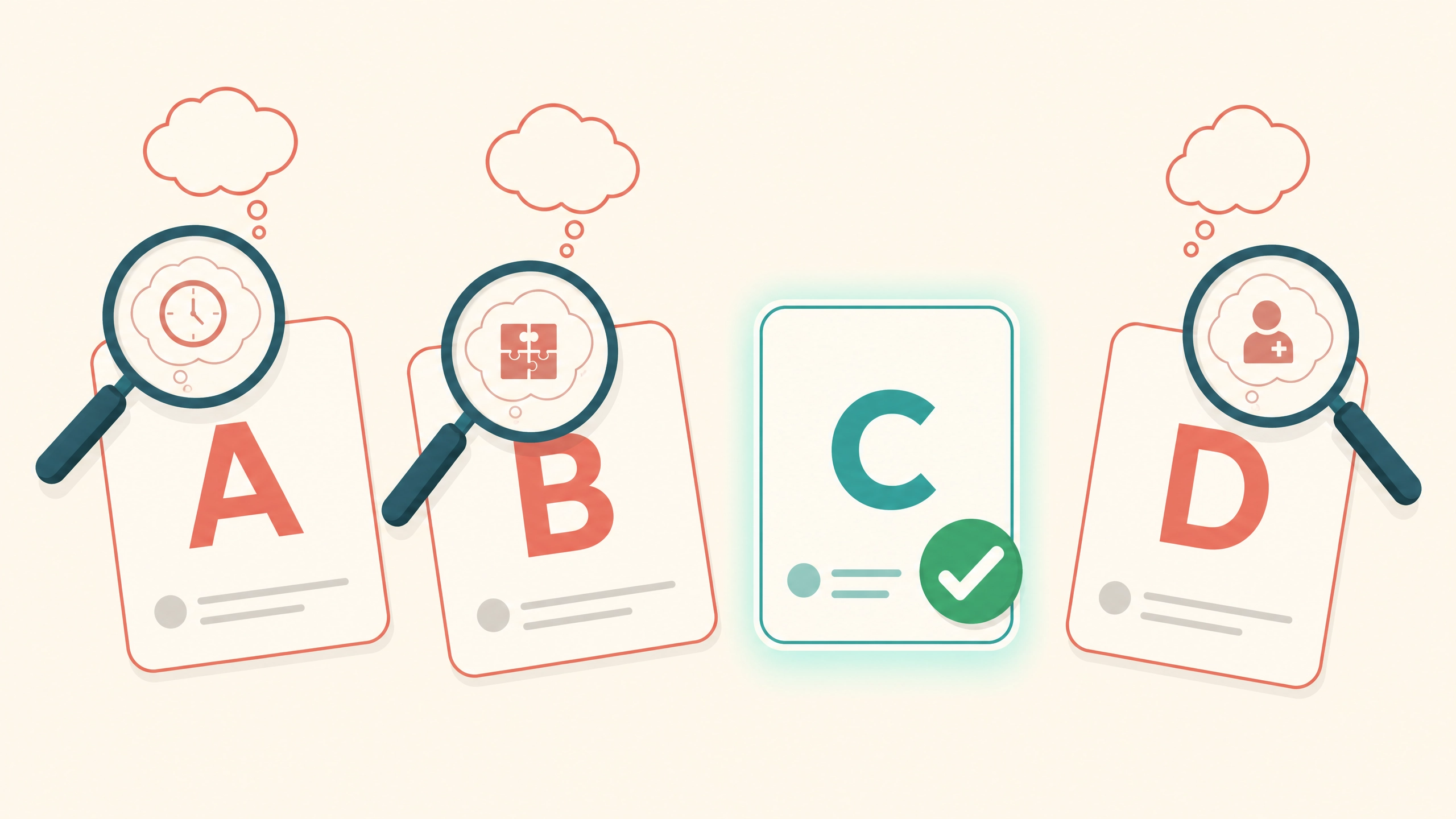
This is the step most students skip, and it’s arguably the most valuable. For every correct answer on the NCLEX, there are three incorrect options called distractors. They are not random; they are designed to seem plausible to a novice nurse.
Your task is to analyze each incorrect option and ask two critical questions:
- “Why is this answer wrong for this specific patient in this specific scenario?”
- “In what context, or for what type of patient, might this answer be correct?”
For example, a distractor might be “administer oxygen,” which seems like a great idea for a patient with shortness of breath. But if the correct answer is “raise the head of the bed,” it’s because that’s the *initial* action that provides the quickest relief and requires no physician’s order. By analyzing the distractor, you learn about prioritization—that “administer oxygen” is a valid nursing action, just not the first one in this case.
Dedicating time to this step deepens your understanding of clinical nuances and sharpens your ability to prioritize, which is a massive component of the NCLEX.
Step 4: Categorize and Connect
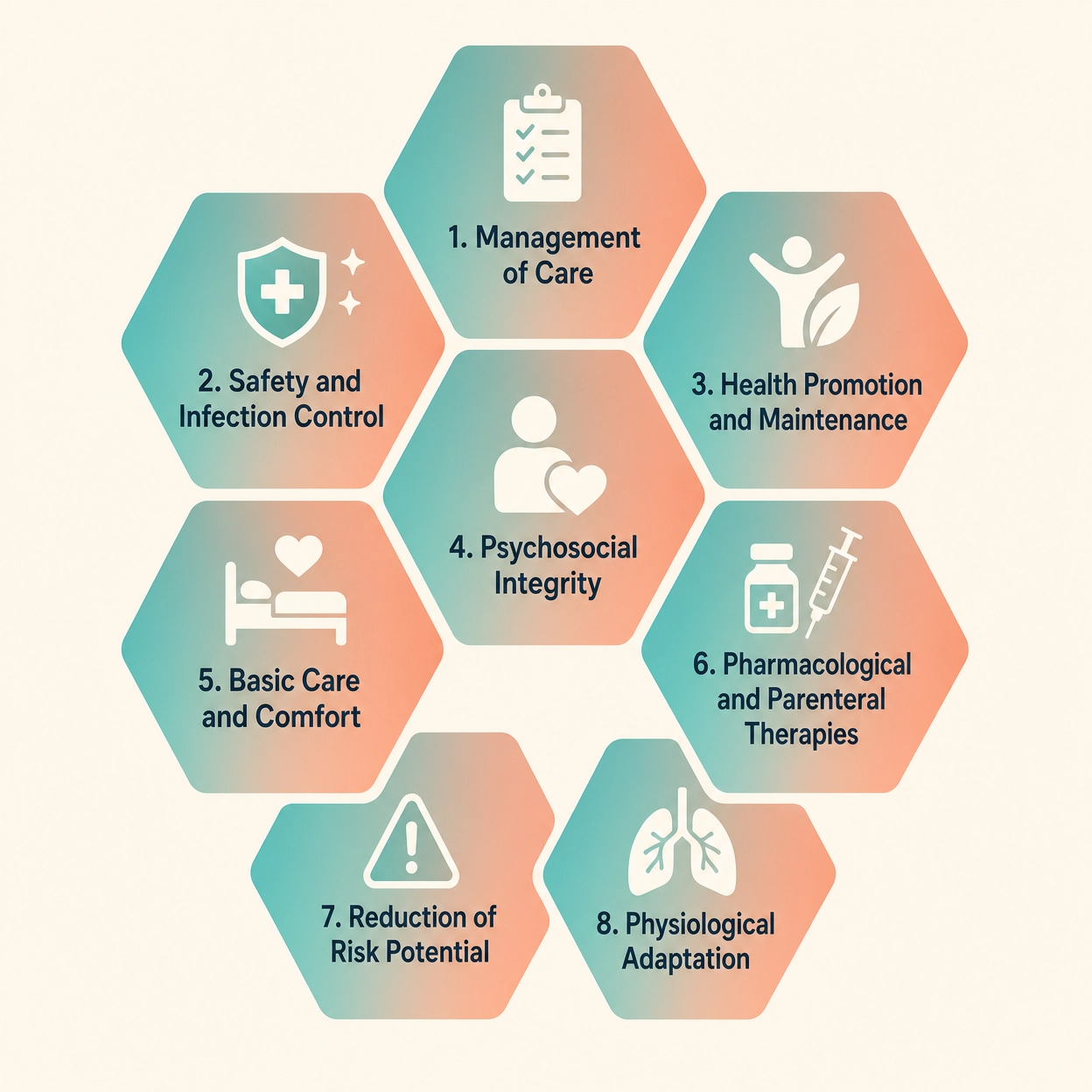
Finally, zoom out. Take the single concept from the question and connect it to your broader nursing knowledge base. Every NCLEX question falls under one of the major NCLEX Client Needs categories.
Identify which category the question belongs to:
- Management of Care
- Safety and Infection Control
- Health Promotion and Maintenance
- Psychosocial Integrity
- Basic Care and Comfort
- Pharmacological and Parenteral Therapies
- Reduction of Risk Potential
- Physiological Adaptation
By categorizing the question, you can start to see patterns. Are you consistently missing questions in “Pharmacological Therapies”? Or maybe you’re strong in “Physiological Adaptation” but struggle with “Management of Care”?
This step moves you from looking at individual trees to seeing the whole forest of your knowledge. It’s how you identify systemic weaknesses and target your remediation efforts effectively.
From Analysis to Action: Tracking Your Progress
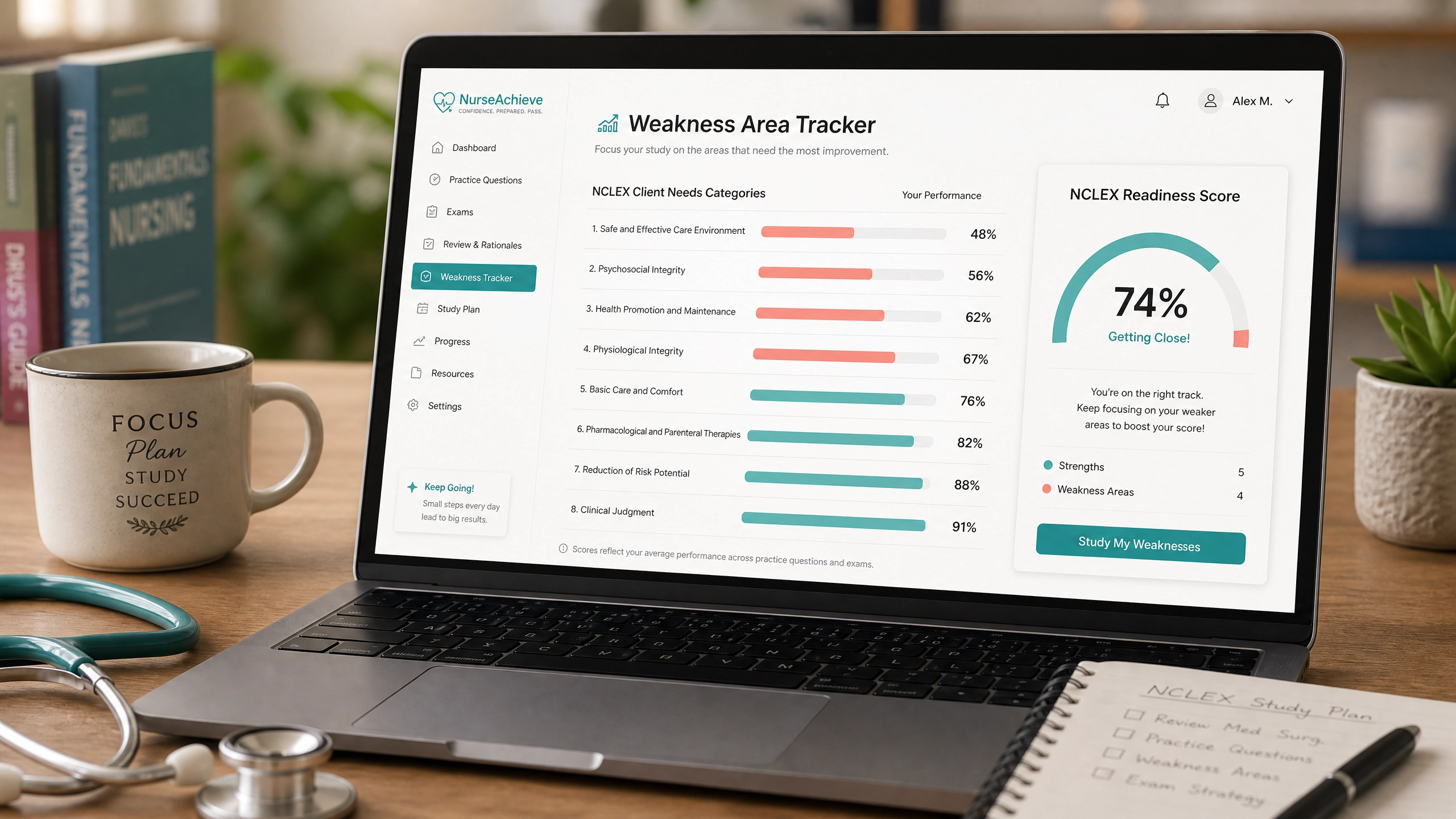
This 4-step analysis is incredibly powerful, but performing it randomly isn’t enough. The key to building real momentum and confidence for the NCLEX is systematic tracking.
You need to move from a vague “feeling” of readiness to a data-driven understanding of your specific strengths and weaknesses. Without a system, you risk studying what you already know while your blind spots remain hidden.
As a former RN and now an advisor, I saw countless students struggle with this exact problem. They were putting in the hours and doing the work, but they had no organized way to track their performance and pinpoint their weakest areas. They were essentially studying in the dark.
That’s precisely why we built the Weakness Area Tracker directly into our Nursing Success Kit (NSK). It’s designed to systematize this process. After you analyze a question using the 4-step method, you log which of the 8 NCLEX Client Needs categories it belongs to and whether you got it right or wrong. The dashboard then does the heavy lifting for you.
It automatically sorts your weakest areas to the top, flagging any content domain where your mastery falls below 75%. This gives you clear, actionable alerts on exactly what to study next. It takes all the guesswork out of your NCLEX study plan.
This data feeds into a single, clear NCLEX Readiness Score, a percentage that tells you precisely where you stand. And as you continue your targeted review, you can watch your Score Trend Chart climb, providing visual proof that your hard work is paying off.
An Arizona Perspective: Local Pass Rates & What They Mean for You

Performing this level of detailed analysis isn’t just about passing a test; it’s about preparing to meet the high standards of nursing practice here in Arizona.
The good news is that graduates from Arizona nursing programs consistently perform well. For first-time candidates educated in Arizona, the 2023 NCLEX-RN pass rate was 90.39%, comfortably above the national average of 88.56%. This speaks to the quality of education at our state’s institutions, but it also sets a high bar for you.
All nursing licensure in the state is overseen by the Arizona State Board of Nursing (AZBN). A disciplined study approach, like the 4-step method, is what ensures you can demonstrate the clinical judgment the AZBN requires to protect public safety.
Furthermore, Arizona is an enhanced Nurse Licensure Compact (eNLC) state. This means that once you earn your license here, you have the privilege to practice in over 40 other compact states. This incredible flexibility makes Arizona a strategic place to begin your career as a registered nurse, opening up a wide range of opportunities on our local job boards and beyond.
A rigorous NCLEX preparation process is your ticket to joining a proud community of highly competent Arizona nurses.
Putting It All Together: A Sample Question Walkthrough
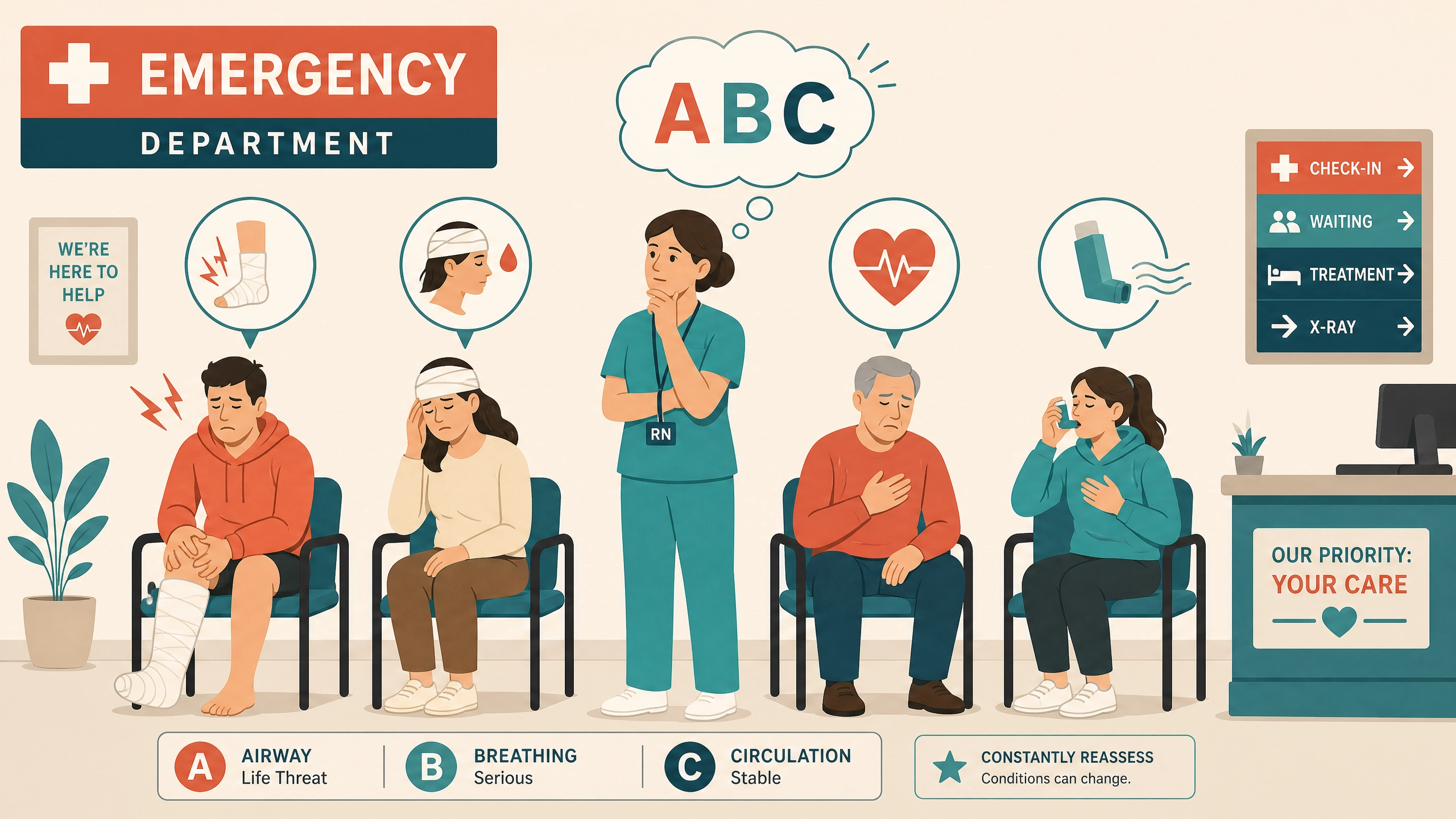
Let’s see how the 4-step blueprint works in practice with a common NCLEX-style prioritization question.
Question: A nurse in the emergency department is caring for four clients who all arrived at the same time. Which client requires the nurse’s immediate attention?
A) A client with a leg fracture who is reporting pain of 8/10.
B) A client with a 5 cm scalp laceration that is actively bleeding.
C) A client who reports chest tightness that radiates to the left arm.
D) A client with a history of asthma who is wheezing and has an oxygen saturation of 91%.
Let’s walk through the analysis.
Step 1: Deconstruct the Question Stem
The most important keyword here is “immediate.” This isn’t just asking who needs help; it’s a prioritization question. I’m looking for the most unstable patient whose condition is the most life-threatening. The core question is: “Who is going to die first if I don’t act now?”
Step 2: Analyze Your Answer
Let’s say my initial thought was D, because wheezing and low oxygen are serious. But after thinking about Airway, Breathing, and Circulation (ABCs), I realize that chest tightness radiating to the arm (C) is a classic sign of a myocardial infarction (MI), which is a massive circulation problem that can lead to cardiac arrest. Therefore, C is the correct answer. My rationale is that an active MI is a greater immediate threat to life than controlled wheezing with an O2 sat of 91%.
Step 3: Evaluate the Distractors
Now, let’s analyze why the other options are wrong for *immediate* attention.
* A) Leg fracture with 8/10 pain: This is a “pain” issue, not a life-threatening one. While the pain is severe and needs to be addressed, it is not the priority over a potential heart attack. This patient is stable.
* B) Scalp laceration: This is a “bleeding/circulation” issue, but it’s external and localized. Direct pressure can manage it. It’s serious, but less systemically critical than a potential MI.
* D) Asthma with wheezing and 91% O2 sat: This is a “breathing” issue and is a very close second. This patient is high-priority. However, an O2 sat of 91% is not yet critical, and the wheezing indicates air is still moving. A potential MI (C) represents a more imminent threat of catastrophic decline.
Step 4: Categorize and Connect
This question clearly falls under the NCLEX Client Need category of Management of Care, as it directly tests my ability to prioritize. I would log this in my tracker. This reinforces my understanding of using the ABC framework to make rapid clinical decisions. It connects directly to what I learned in my emergency and critical care rotations.
Your Path to Passing

Success on the NCLEX isn’t a matter of luck or simply knowing the most facts. It’s a matter of strategy. It’s about shifting your focus from the sheer volume of questions you answer to the quality and depth of your review after every NCLEX question.
The 4-step analysis—Deconstruct, Analyze, Evaluate, and Categorize—transforms your study sessions from passive memorization into active, strategic training for exam day. This is how you build true clinical judgment and the confidence that comes with it.
What will you do differently after reading this? Start today. Apply this 4-step analysis to your next ten practice questions. Feel the difference it makes. To see how you can systematize this process and get a real-time picture of your readiness, I encourage you to explore the tools we built in the Nursing Success Kit.
You have the knowledge and the capability. Now you have the strategy. You can and you will succeed.